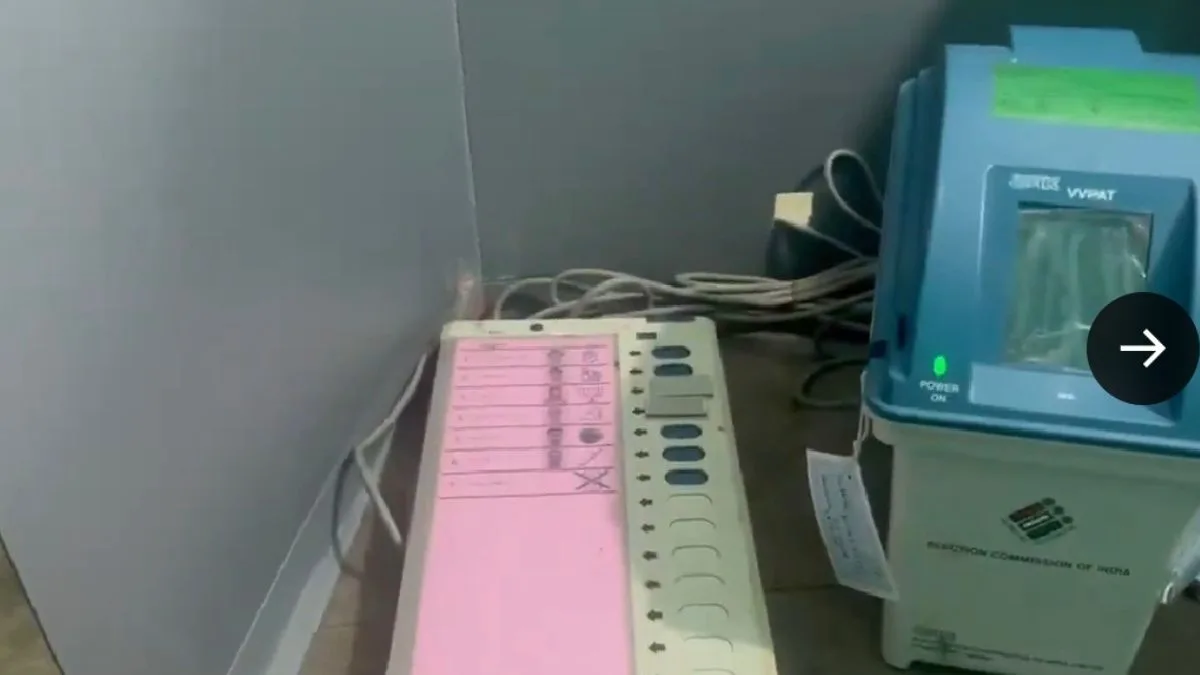
The recent fire in Kolkata that reportedly damaged thousands of Electronic Voting Machines has triggered predictable reactions. Some see it as an unfortunate accident. Others see reasons for suspicion. Investigations will determine what happened. Yet the larger lesson of the episode may lie elsewhere. The real question is not whether the fire was accidental or deliberate.
It is why so much of India’s electoral verification architecture continues to depend on physical storage, physical custody and manual processes long after votes have been electronically recorded. For years, public debate over elections has revolved around a single issue: can EVMs be trusted? The argument has often reduced a complex process to a binary choice between complete faith and complete distrust. Lost in that debate is a more important question. Even if one assumes that EVMs function exactly as intended, why does the subsequent chain of tabulation, verification and record preservation still rely so heavily on human intervention?
Advertisement
India has successfully digitised the act of voting. Yet critical stages that follow remain surprisingly analogue. Vote totals displayed on control units are manually entered into records, consolidated across counting tables and compiled before final publication. Election materials continue to depend on physical storage and custody. Every such stage introduces opportunities not necessarily for wrongdoing, but for avoidable error, dispute and mistrust. Democracies thrive not merely on fairness but on confidence. Citizens must be able to trust that outcomes accurately reflect votes cast.
Equally important, losing candidates and their supporters must have confidence that the process was transparent and verifiable. Public trust cannot depend solely on assurances. It must rest on systems that minimise ambiguity. Modern technology offers solutions that were unimaginable when India’s electoral procedures were originally designed. Secure digital custody chains can authenticate machine identity and seal status throughout storage and transport. Vote totals can move directly from authorised machines into encrypted tabulation systems without manual transcription.
Automated cross-verification can instantly identify discrepancies. Digitally signed audit trails can preserve records in multiple secure locations, reducing dependence on any single physical repository. None of these reforms require abandoning EVMs. Nor do they require accepting allegations of electoral malpractice. They simply recognise that technology has advanced while many supporting procedures have remained largely unchanged. The objective of electoral reform should not be to compensate for proven failures but to strengthen transparency and confidence before doubts arise.
In an era when banks process millions of digital transactions and stock exchanges settle vast volumes of trades electronically every day, there is little reason why election administration should continue to depend on avoidable manual processes. The future debate should therefore move beyond whether EVMs can be trusted. The more important challenge is ensuring that every stage after the vote is cast is equally transparent, auditable and trusted. Democracy is strongest when confidence in the count is as secure as confidence in the vote itself